 🐱 Cat Mystery
The short answer
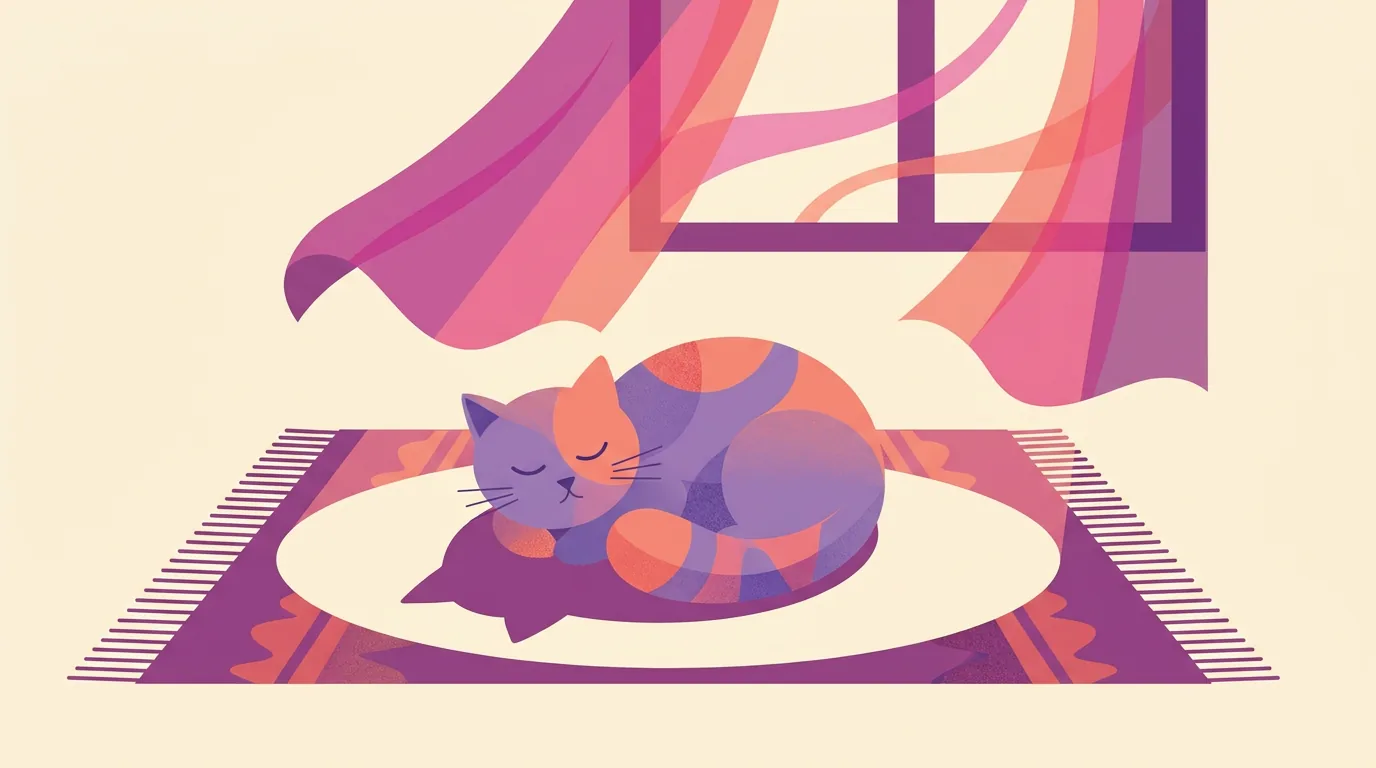
Cats sleep 12–16 hours a day (kittens and seniors even more) — it’s completely normal and rooted in their predator biology, which favors conserving energy between bursts of hunting. Watch for sudden changes, not the sheer amount.
Cats sleep an amount that looks alarming until you know the baseline. The useful thing is not the total — it is knowing what normal looks like for your cat specifically, because a change from that is one of the more reliable early signals of illness in a species that hides everything.
The normal range
Adult cats typically sleep somewhere between 12 and 16 hours a day, and kittens and senior cats commonly sleep more — up to around 20 hours is not unusual at either end of life.
Much of that is not deep sleep. Cats spend a large share of it in a light doze, ears still rotating toward sounds, able to go from apparently unconscious to fully alert in under a second. The deep, fully relaxed sleep — often on the back or curled with the face tucked away — is a smaller portion of the total.
Why so much
- Obligate carnivore energetics. Hunting is metabolically expensive and comes in short, intense bursts. Sleeping between bursts conserves energy for the next one, and domestic cats retain the pattern even when the hunting is replaced by a bowl.
- Crepuscular rhythm. Cats are built for dawn and dusk activity, so the long midday and overnight stretches are naturally low-activity periods rather than aberrations.
- Light sleep is cheap. Much of a cat's rest is a state it can leave instantly, so the cost of taking it is low.
- Age. Kittens sleep for growth; senior cats sleep more as activity and mobility decline.
- Weather and season. Most cats sleep noticeably more in cold or wet weather, and owners often report a seasonal pattern.
- Boredom. An indoor cat with no stimulation sleeps because there is nothing else on offer — the least healthy item on this list and the most fixable.
What actually matters: change
The total hours are far less informative than the trend. Cats conceal illness effectively, and a shift in sleeping pattern is frequently the first thing an owner notices — often described afterwards as 'she just slowed down'.
Worth acting on:
- A clear increase over weeks in a cat whose routine has not otherwise changed.
- Sleeping in new or unusual places, particularly hidden ones — under beds, in wardrobes, behind furniture. Cats withdraw when unwell.
- Difficulty getting comfortable, or sleeping somewhere lower than usual because the old spot required a jump.
- Sleeping through meals, or being harder to rouse than normal.
- Reduced grooming, so the coat looks unkempt or greasy — one of the most reliable and most overlooked signs of feline illness.
- Increased sleep alongside weight change, increased thirst or urination, appetite change or vocalising.
The jump test
Arthritis is common in older cats and badly under-diagnosed, largely because cats almost never limp visibly. Instead they stop doing things. If your cat sleeps on the sofa now rather than the windowsill it used it for years, that is not a change of preference — it is very likely a change of ability. Watch whether your cat still jumps to its old favourite spots, whether it hesitates before jumping, and whether it takes the journey in stages. Pain relief for feline arthritis is genuinely transformative, and owners frequently report their cat 'became young again'.
The conditions to know about
Several common feline diseases present with changes in activity and rest, and most are far more manageable caught early.
Hyperthyroidism is the most common endocrine disease of cats and typically causes the opposite — restlessness, increased appetite with weight loss, and vocalising — but treated or late-stage cases can present with lethargy instead. Chronic kidney disease, diabetes, anaemia, heart disease, arthritis and dental pain all reduce activity. Cognitive dysfunction in elderly cats disrupts the sleep-wake cycle, often producing more daytime sleep and night-time restlessness.
See a vet if
Sleep has clearly increased over weeks; your cat is hiding or sleeping in unusual places; it is harder to rouse than normal or sleeping through meals; grooming has dropped off and the coat looks unkempt; or increased sleep comes with weight loss, increased thirst or urination, appetite change, vomiting, or reluctance to jump. In cats over about seven, any marked change in activity warrants a check with blood work — the common conditions are all diagnosable with a straightforward panel.
If it is boredom
A healthy cat sleeping through an empty house is not ill, but it is under-stimulated, and that has real consequences for weight and behaviour.
Two short structured play sessions a day with a wand toy, run until the cat is genuinely tired rather than for a token few minutes, changes the picture more than anything else. Puzzle feeders and hiding portions of the daily ration around the house replace some of the hunting behaviour a bowl removes. Vertical space and a window perch with something to watch give a cat a reason to be awake — and a cat with a reason to be awake sleeps less and eats better.
Gear that actually helps
Hand-picked for this behavior. We may earn a small commission — at no cost to you.
Frequently asked
How much should a cat sleep?
Adult cats typically sleep 12 to 16 hours a day, and kittens and senior cats often more — up to around 20 hours is not unusual at either end of life. Much of it is light dozing rather than deep sleep.
Why do cats sleep so much?
Hunting is metabolically expensive and comes in short bursts, so conserving energy between them is efficient — domestic cats keep the pattern even when a bowl replaces the hunting. They are also crepuscular, so long midday and overnight stretches are naturally low-activity.
When is a cat sleeping too much?
The total matters less than the trend. Act on a clear increase over weeks, sleeping in hidden or unusual places, being harder to rouse, sleeping through meals, reduced grooming, or increased sleep alongside weight, thirst or appetite changes.
My cat stopped sleeping on the windowsill. Does that matter?
Probably yes. Cats rarely limp with arthritis — they stop doing things instead. A cat that now sleeps somewhere lower than it used to for years has likely had a change of ability, not preference. Feline arthritis pain relief is often transformative.
What illnesses make cats sleep more?
Chronic kidney disease, diabetes, anaemia, heart disease, arthritis and dental pain all reduce activity, and cognitive dysfunction disrupts the sleep-wake cycle in elderly cats. In cats over seven, any marked change in activity warrants a check with blood work.
How do I get my cat to be more active?
Two short structured wand-toy sessions a day, run until the cat is genuinely tired. Add puzzle feeders and hide portions of the daily ration around the house to replace some of the hunting a bowl removes, plus vertical space and a window perch worth watching.
Sources
Every claim on this page is checked against published veterinary and animal-behaviour research. Here’s where it comes from.
- 1The Special Needs of the Senior Cat — Cornell Feline Health Center
- 2Hyperthyroidism in Cats — Cornell Feline Health Center
Keep exploring
Why Does My Cat Sleep on My Pillow?
Your cat has claimed your pillow as their own. It’s a bigger compliment than it seems.
Why Does My Cat Stare at Me While I Sleep?
You wake up to two eyes locked on you. Creepy? Actually, it’s mostly love (and breakfast hopes).
Why Does My Cat Sleep in Weird Positions?
Folded like a pretzel or sprawled belly-up — your cat’s weird sleep poses actually mean something.
 🐱 Cat Mystery
Why Does My Cat Follow Me Everywhere? Inside the “Velcro Cat”
Bathroom, kitchen, back again — your shadow has whiskers. Here’s why your cat can’t seem to let you out of sight.
 🐱 Cat Mystery
Why Does My Cat Sleep at My Feet? The Sweet Spot, Explained
Not on your chest, not across the room — your feet. There’s a surprisingly clever logic to your cat’s favorite sleeping spot.
 🐱 Cat Mystery
Why Does My Cat Sleep on My Head? The Pillow Thief, Explained
You wake up wearing a cat hat. Again. Here’s why your head is your cat’s favorite mattress.