The short answer
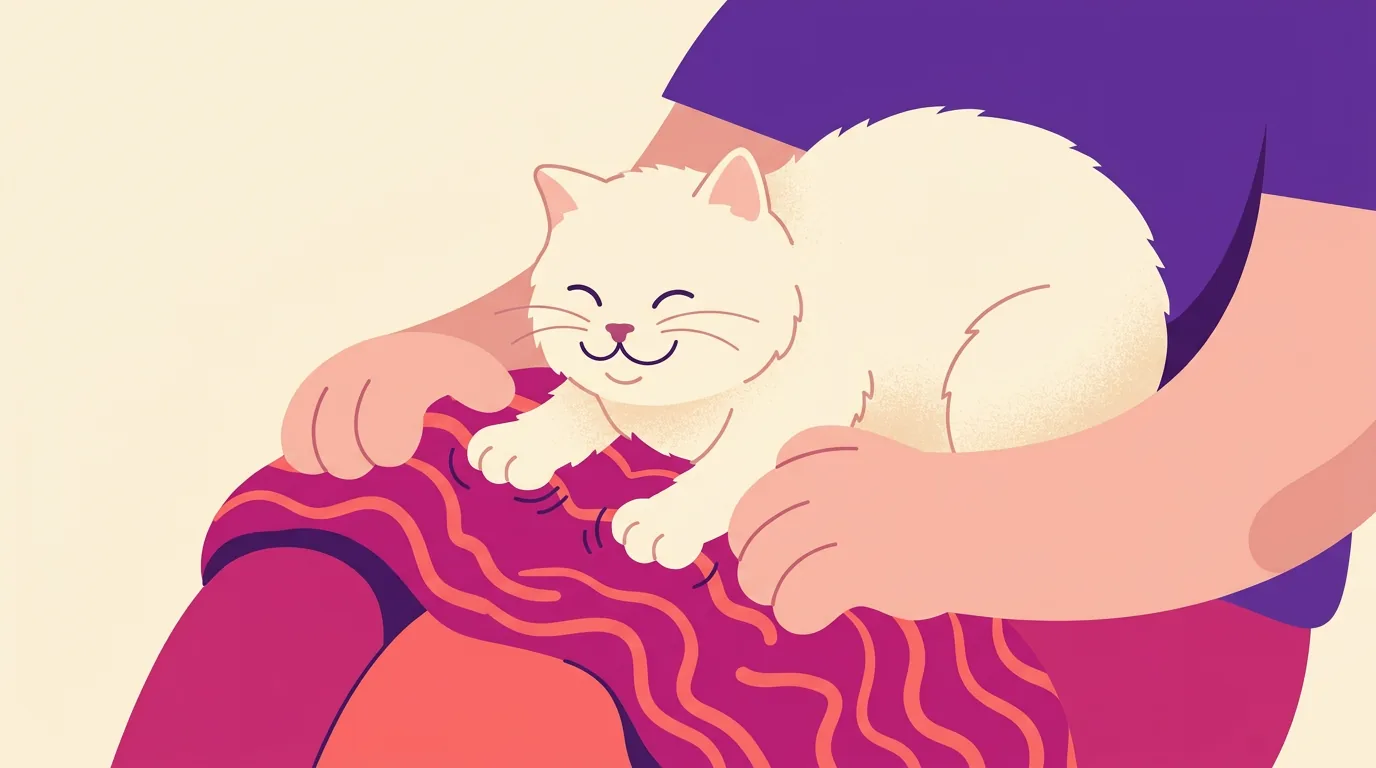
Kneading blankets is a leftover kitten instinct (kittens knead to stimulate milk) that now means comfort and contentment. Cats also knead soft surfaces to nest, mark them with paw scent, and self-soothe before settling down.
Kneading a blanket is the same behaviour as kneading a person, minus the claws-in-skin problem. What makes the blanket version worth its own explanation is what often comes with it: suckling, and the wool-sucking behaviour that sits next to pica.
Why fabric rather than you
Soft, textured fabric holds scent well and gives better resistance underfoot than skin. Cats have scent glands in their paw pads, so kneading deposits scent — and a blanket that already smells of the cat, or of you, is a more satisfying target than bare skin.
There is also the practical point that a blanket does not flinch. Cats that have been pushed off a lap for clawing will often relocate to fabric, which is a reasonable outcome rather than a rejection.
The kitten origin
Kneading begins at nursing. Kittens press alternate paws against their mother to stimulate milk flow, and the motion becomes permanently associated with warmth, food and safety. Most kneading in adult cats is that association persisting rather than any current function.
Blankets amplify it because they are the closest available texture to a mother's fur, which is why cats so often knead the same specific blanket rather than whichever is nearest.
Kneading versus wool-sucking
This is the distinction that matters. Some cats knead and stop there. Others knead and suckle — taking a fold of blanket into the mouth and sucking rhythmically, often drooling, sometimes for long stretches.
Wool-sucking is a recognised behaviour that veterinary sources group with chewing and sucking problems, and it sits adjacent to pica. It is reported most in Burmese and Siamese, the same breeds over-represented in pica, which suggests shared genetic ground. Cats weaned very early are also over-represented.
By itself, wool-sucking is usually harmless — a self-soothing behaviour in a cat that finds it comforting. It becomes a problem when sucking progresses to chewing and swallowing, because that is pica with an obstruction risk attached.
The risk that makes this urgent
Swallowing non-food material can cause gastrointestinal obstruction — the object lodging in the oesophagus, stomach or intestines. That causes pain, reduced appetite and vomiting, and a sharp object can ulcerate or perforate the gut. String and thread are especially dangerous because they can saw through intestine. Seek same-day veterinary care for repeated vomiting, refusal to eat, lethargy, a painful or distended abdomen, straining without producing stool, or if you know your cat has swallowed fabric, plastic, string or thread. Never pull on a string you can see — it may extend into the gut, and pulling can cause serious internal injury.
Let them keep the blanket, just pick the right one
There is no reason to stop kneading or even gentle suckling — it is self-soothing and harmless. What is worth doing is choosing the material. Give a designated blanket in a tight-woven fleece rather than a loose knit or wool, since loose fibres are what get pulled free and swallowed. Check it regularly for holes and chewed edges, and replace it when it starts shedding. Wash it rarely, or wash half at a time — the cat's own scent is much of the appeal.
When to look closer
The behaviour itself is benign. What is worth attention is a change, and any progression toward ingestion.
A cat that suddenly starts kneading and suckling far more than usual may be responding to stress — a move, a new pet, building work, a change in routine. Persistent, hard-to-interrupt suckling in a cat that cannot settle otherwise points to anxiety worth addressing rather than a charming quirk.
Speak to a vet if
Suckling has progressed to chewing or swallowing fabric; the blanket is developing holes or losing fibres; the behaviour is new, intense and hard to interrupt; or your cat is also targeting plastic, string, elastic or wool clothing. Also worth raising if the behaviour appeared alongside weight loss, appetite change, vomiting or over-grooming — pica in cats has documented gastrointestinal associations, and Burmese and Siamese warrant a lower threshold for investigating.
Gear that actually helps
Hand-picked for this behavior. We may earn a small commission — at no cost to you.
Frequently asked
Why does my cat knead blankets instead of me?
Soft textured fabric holds scent well and gives better resistance underfoot than skin, and cats deposit scent from glands in their paw pads. A blanket also does not flinch, so cats pushed off a lap for clawing often relocate to fabric.
Why does my cat suck the blanket while kneading?
That is wool-sucking, a recognised behaviour grouped with chewing and sucking problems and sitting adjacent to pica. It is reported most in Burmese and Siamese, and cats weaned very early are over-represented. On its own it is usually harmless self-soothing.
Is wool sucking dangerous?
Not by itself. It becomes dangerous when sucking progresses to chewing and swallowing, because ingested fabric can cause gastrointestinal obstruction. Watch for holes appearing in the blanket and fibres going missing.
Should I stop my cat kneading blankets?
No need. Instead choose the material: a designated tight-woven fleece rather than loose knit or wool, since loose fibres are what get pulled free and swallowed. Check it for holes and replace it when it starts shedding.
Why does my cat drool while kneading a blanket?
It is a carryover from nursing, when kneading, suckling and milk all arrived together. Mild drooling during a relaxed kneading session is normal. Drooling outside that context should be checked, as it often indicates dental disease.
My cat suddenly started doing this much more. Why?
A marked increase often reflects stress — a move, a new pet, building work or a routine change. Persistent, hard-to-interrupt suckling in a cat that cannot otherwise settle is worth raising with your vet rather than treating as a quirk.
Sources
Every claim on this page is checked against published veterinary and animal-behaviour research. Here’s where it comes from.
- 1Cat Behavior Problems — Chewing and Sucking — VCA Animal Hospitals
- 2Pica in Cats — VCA Animal Hospitals
- 3Feline Behavior Problems: Destructive Behavior — Cornell Feline Health Center
Conditions mentioned on this page
Full guides to each one — signs, urgency, and what to ask your vet.
Keep exploring
 🐱 Cat Mystery
Why Does My Cat Knead Me? The Truth Behind “Making Biscuits”
That rhythmic paw-pushing on your lap isn’t random — it’s one of the sweetest compliments a cat can give you. Here’s what it really means.
Why Does My Cat Trill? The Happy Chirp, Explained
That cute little “brrp!” your cat makes? It’s one of their warmest, friendliest sounds. Here’s what it means.
 🐱 Cat Mystery
Why Does My Cat Sleep at My Feet? The Sweet Spot, Explained
Not on your chest, not across the room — your feet. There’s a surprisingly clever logic to your cat’s favorite sleeping spot.
 🐱 Cat Mystery
Why Does My Cat Sleep on My Head? The Pillow Thief, Explained
You wake up wearing a cat hat. Again. Here’s why your head is your cat’s favorite mattress.
Why Does My Cat Bite My Ankles? Ambush Attacks, Explained
Surprise ankle ambushes from behind the couch? Your cat is hunting. Here’s how to redirect it.
Why Does My Cat Follow Me to the Bathroom?
No privacy with a cat in the house. Here’s why the bathroom always comes with a feline chaperone.