 🐱 Cat Mystery
The short answer
Chewing or “eating” your hair is usually affection and grooming instinct — treating you like family. It can also be attraction to hair-product smells or, if compulsive, a sign of stress or a condition called pica.
There is a real difference between a cat that grooms your hair and a cat that eats it, and it is worth establishing which you have. Grooming is social behaviour. Ingestion is pica, and pica has a genuine medical dimension.
Where it starts: grooming
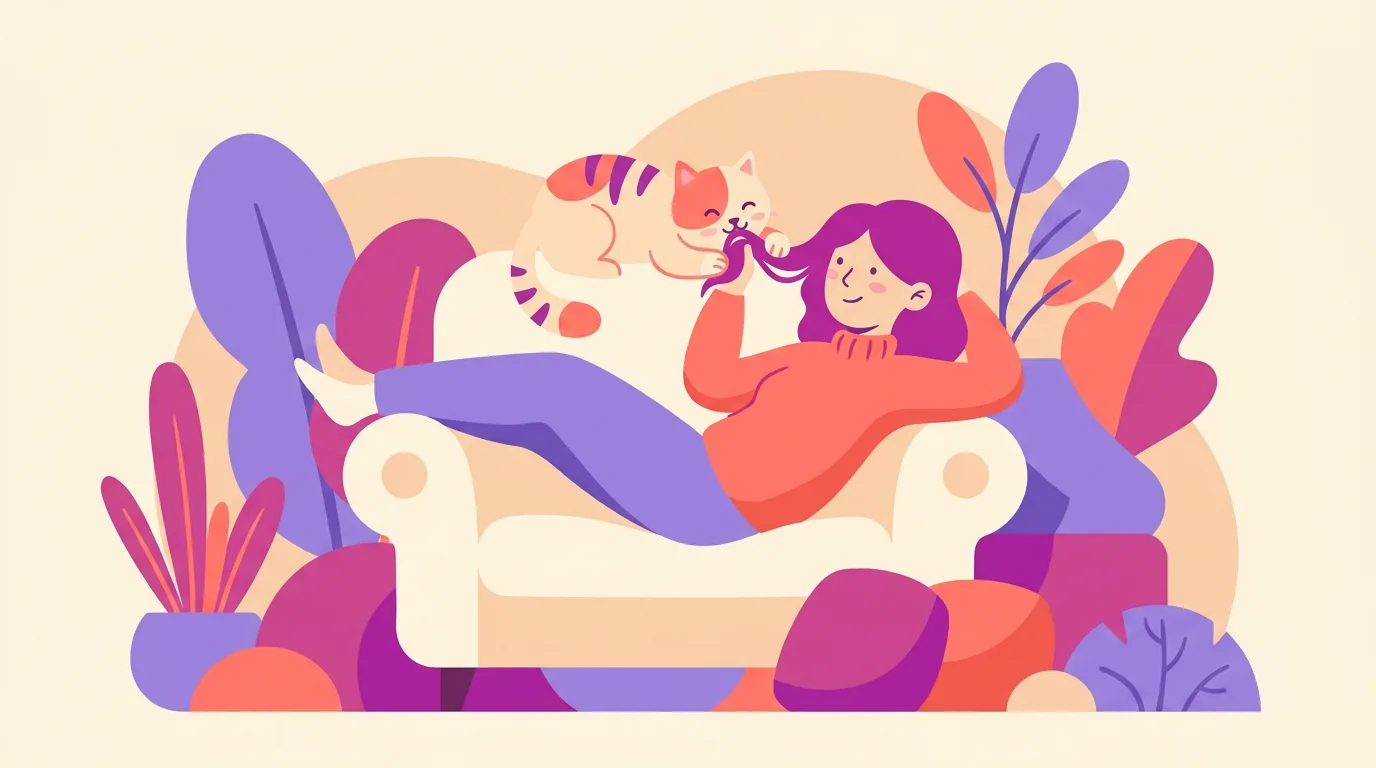
Cats direct social grooming at heads and necks — the areas another cat cannot reach alone — and your hair is the closest thing you have to fur. So hair-mouthing usually begins as ordinary allogrooming, which is affiliative and entirely normal.
The behaviour crosses a line when the cat starts chewing and swallowing rather than licking and nibbling. That is not more affection; it is a different behaviour with different causes.
Pica, and why it is not just a quirk
Pica is the persistent ingestion of non-food items — hair, fabric, plastic, paper, string, elastic. Veterinary sources are clear that it has both behavioural and medical causes, and that the medical ones are worth excluding.
- Gastrointestinal disease. Inflammatory bowel disease, exocrine pancreatic insufficiency and liver shunt are all specifically associated with pica in cats. This is the group people most often skip.
- Nutritional factors, including diets low in fibre or bulk.
- Anaemia and other metabolic conditions.
- Comfort-seeking. Pica frequently overlaps with wool-sucking behaviour, which appears to be a self-soothing carryover from nursing.
- Boredom and under-stimulation, particularly in indoor-only cats with no hunting outlet.
- Stress. New pets, moves, building work and routine changes all raise it.
The breed link is real
Pica is not evenly distributed across cats. It is most commonly reported in Burmese and Siamese, which points to a genetic predisposition — one that veterinary sources compare to obsessive-compulsive disorders in humans.
If you have an Oriental breed, pica is more likely to be constitutional and more likely to be lifelong. That does not make it harmless — it makes management, rather than cure, the realistic goal, and it makes prevention of access more important rather than less.
Why hair specifically is a problem
Hair is not digestible. Swallowed in quantity it behaves like any other indigestible fibre: it accumulates, and long hair in particular can form or contribute to a trichobezoar — a hairball that does not pass.
Cats already ingest their own fur while grooming, and most of it passes or is vomited. Adding human hair, especially long strands, increases the load on a system that is already handling fur.
The risk that makes this urgent
Swallowing non-food material can cause gastrointestinal obstruction — the object lodging in the oesophagus, stomach or intestines. That causes pain, reduced appetite and vomiting, and a sharp object can ulcerate or perforate the gut. String and thread are especially dangerous because they can saw through intestine. Seek same-day veterinary care for repeated vomiting, refusal to eat, lethargy, a painful or distended abdomen, straining without producing stool, or if you know your cat has swallowed fabric, plastic, string or thread. Never pull on a string you can see — it may extend into the gut, and pulling can cause serious internal injury.
What to do
Management beats correction here
Tie hair up at night and when settling on the sofa — that alone resolves a large share of cases. Pick up loose hair from brushes, plugholes and floors, since many cats target shed hair rather than attached hair. Then add stimulation: two structured wand-toy sessions a day, puzzle feeders, and hiding portions of the daily ration around the house. Punishment does not work on pica and tends to add stress, which is one of the drivers.
Redirect rather than refuse. Offering a hand to groom, or sliding a soft blanket between your head and the cat, keeps the social behaviour while removing the material. Some owners find a cat grass tray helps by giving a legitimate thing to chew.
When to involve a vet
Occasional hair-nibbling in an otherwise well cat needs nothing. Persistent ingestion does — and the reason is that the behavioural explanation is only correct once the medical ones have been ruled out.
Book an appointment if
Your cat is swallowing hair rather than grooming it; the behaviour is new, escalating, or hard to interrupt; it has spread to fabric, plastic, string or elastic; or it comes with vomiting, weight loss, appetite change, diarrhoea, or a poor coat. Ask specifically about gastrointestinal causes — inflammatory bowel disease, exocrine pancreatic insufficiency and liver shunt are all documented associations, and they are not something a behaviour plan will fix.
Gear that actually helps
Hand-picked for this behavior. We may earn a small commission — at no cost to you.
Frequently asked
Why does my cat eat my hair?
It usually starts as social grooming — cats direct grooming at heads and necks, and hair is the closest thing you have to fur. It becomes pica when the cat chews and swallows rather than licks, and pica has medical causes including inflammatory bowel disease and other gastrointestinal conditions.
Is eating hair dangerous for cats?
Yes, in quantity. Hair is indigestible and can contribute to a hairball that does not pass, or to gastrointestinal obstruction. Cats already handle their own shed fur, so added human hair increases the load on a system already working.
Which cats are most prone to pica?
Burmese and Siamese are the most commonly reported, which suggests a genetic predisposition — veterinary sources compare it to obsessive-compulsive disorders in humans. In Oriental breeds it is more likely to be lifelong, making management rather than cure the realistic goal.
How do I stop my cat eating my hair?
Management first: tie hair up at night and on the sofa, and clear loose hair from brushes, plugholes and floors, since many cats target shed hair. Then add stimulation — two wand-toy sessions a day, puzzle feeders, hidden food. Punishment does not work and adds stress, which is a driver.
When is hair eating an emergency?
Seek same-day care for repeated vomiting, refusal to eat, lethargy, a painful or distended abdomen, or straining without producing stool. If string or thread is involved, never pull on what you can see — it may extend into the gut and pulling can cause serious internal injury.
Should I ask my vet about anything specific?
Yes — ask about gastrointestinal causes by name. Inflammatory bowel disease, exocrine pancreatic insufficiency and liver shunt are all documented associations with feline pica, and none of them respond to a behaviour plan.
Sources
Every claim on this page is checked against published veterinary and animal-behaviour research. Here’s where it comes from.
- 1Pica in Cats — VCA Animal Hospitals
- 2Cat Behavior Problems — Chewing and Sucking — VCA Animal Hospitals
- 3Owner-Reported Pica in Domestic Cats Enrolled onto a Birth Cohort Study — PubMed Central
Conditions mentioned on this page
Full guides to each one — signs, urgency, and what to ask your vet.
Keep exploring
 🐱 Cat Mystery
Why Does My Cat Lick My Hair? The Grooming Compliment
Waking up to a cat styling your hair with their tongue? It’s weird, it’s sweet, and it means more than you’d think.
Why Does My Cat Bite My Hair? The Quirky Grooming Habit
Little nibbles on your ponytail? It’s your cat treating your hair like family fur. Here’s the deal.
Why Does My Cat Follow Me to the Bathroom?
No privacy with a cat in the house. Here’s why the bathroom always comes with a feline chaperone.
Why Does My Cat Lay on My Clothes?
Fresh laundry, worn hoodie, it doesn’t matter — your cat will claim it. Here’s the cozy reason why.
Why Does My Cat Sleep on My Pillow?
Your cat has claimed your pillow as their own. It’s a bigger compliment than it seems.
Why Does My Cat Lick the Wall?
Tongue to the wall? It’s odd but common — and here’s how to tell harmless curiosity from a red flag.