Why Does My Dog Lick the Couch? Boredom, Taste, or Something Else?
 🐶 Dog Mystery
The short answer
Couch-licking is usually about taste (spilled food and your scent soaked into the fabric) or boredom and stress relief. If it becomes obsessive, it can point to anxiety or, occasionally, nausea.
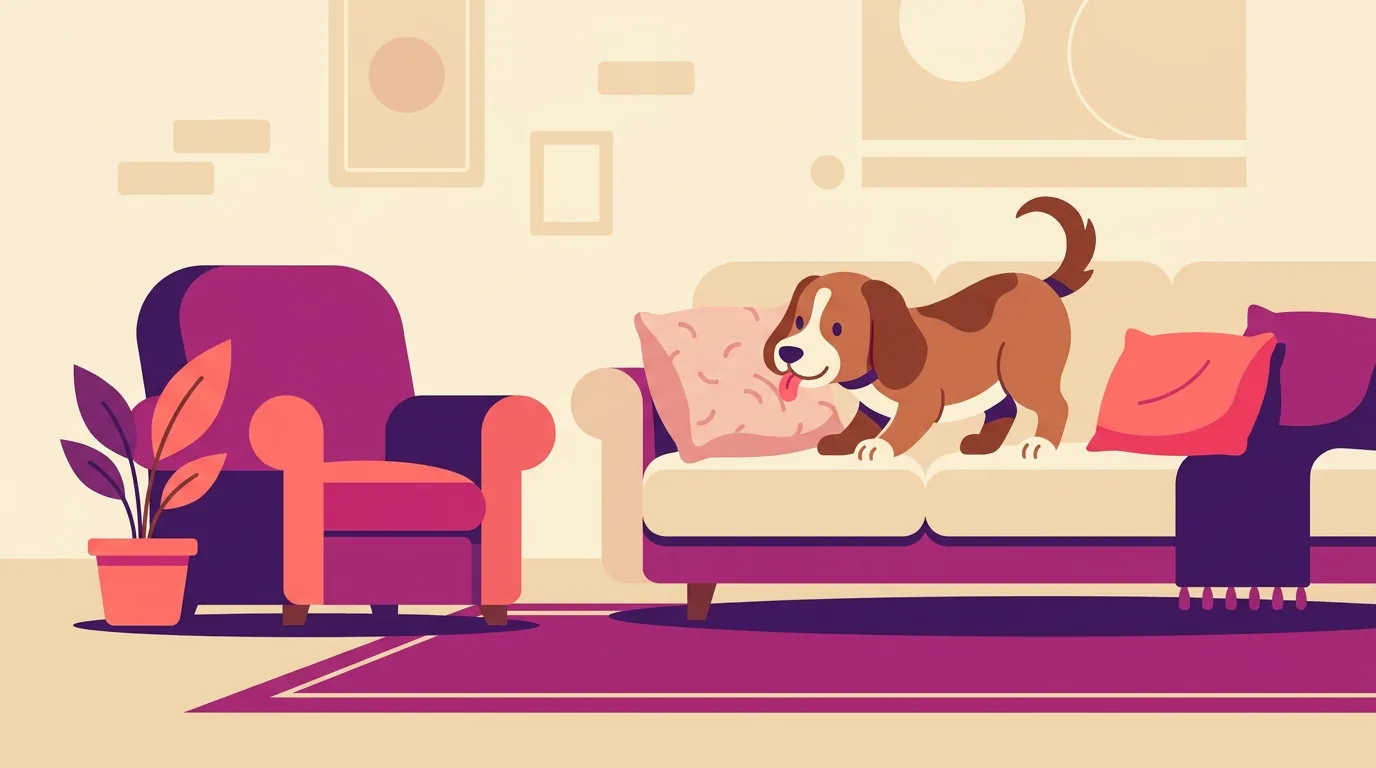
Sofa-licking is oddly specific and oddly common. Some of it is exactly what it looks like — the sofa tastes interesting — but repetitive, sustained licking of upholstery belongs to a recognised pattern with a medical explanation behind it more often than owners expect.
The boring explanation first
Sofas accumulate a remarkable amount of edible residue: crumbs, spilled drinks, skin cells, sweat and body oils, and whatever was on your hands. Fabric holds all of it, and dogs have a sense of smell that makes a sofa considerably more interesting than it looks.
The tell is context. A dog that licks a particular patch after someone ate there, then loses interest, is doing normal scavenging. A dog that licks the same section of upholstery for twenty minutes at a stretch, repeatedly, over weeks, is doing something else.
Excessive licking of surfaces
Repetitive licking directed at furniture, floors and walls has a name in veterinary behaviour — excessive licking of surfaces, or ELS — and the evidence on it is genuinely surprising.
Bécuwe-Bonnet and colleagues took dogs presented for this behaviour and gave them a full medical work-up rather than treating it as a behavioural problem by default: behavioural, internal medicine and neurological assessment, with bloods, faecal testing, ultrasound and endoscopy, against a healthy control group.
Around 60% turned out to have a gastrointestinal disorder. After treatment aimed at the gut, almost 60% improved significantly and over half resolved entirely. In other words, for a majority of these dogs the sofa was not the point — nausea was.
Ask your vet about the gut, not just the behaviour
If your dog licks surfaces excessively, ask specifically whether a gastrointestinal work-up is warranted. In the Bécuwe-Bonnet study, roughly 60% of dogs presented for excessive licking of surfaces turned out to have a gastrointestinal disorder, and after treatment for it almost 60% improved significantly, with over half resolving completely. Behaviour-only management misses that entirely. Go sooner if licking comes with vomiting, diarrhoea, appetite or weight change, excessive drooling, lip-smacking, gulping, or a hunched posture.
Why nausea shows up as licking
Dogs that feel sick salivate more, swallow repeatedly, smack their lips and lick available surfaces. It is the same cluster of signs seen just before vomiting, spread out at lower intensity over a longer period.
That is why timing is informative. Licking that concentrates in the evening, when the stomach has been empty for hours, or that clusters around meals, points more toward the gut. Licking that concentrates when you pick up your keys points somewhere else entirely.
The behavioural causes
- Anxiety. Licking is self-soothing because it releases endorphins. Sofa-licking that spikes when you leave, during storms, or after a household change is a coping behaviour.
- Boredom. Repetitive behaviours fill empty time, particularly in working breeds and dogs left alone for long periods.
- Attention. If licking the sofa has ever produced a reaction — being spoken to, moved, or given something else — it has been reinforced.
- Compulsive disorder. Genuine, but veterinary guidance is consistent that medical causes come first, because licking often begins as a response to a physical problem and persists after it resolves.
There is also a fabric-specific version worth mentioning: some dogs lick and then chew upholstery, and ingested fabric is a genuine obstruction risk. Licking that has progressed to chewing or swallowing material is a different and more urgent problem.
How to work out which it is
Track it for a week. Note the time of day, whether it happens near meals, whether you are in the room, and how long each episode lasts. Add any vomiting, loose stool, gulping, drooling or grass-eating even if it seems unconnected. A dog that licks mainly when alone is telling you something different from one that licks mainly on an empty stomach — and that distinction is what your vet needs.
What not to do
Do not use a deterrent spray as the first move. Bitter sprays sometimes stop the licking of that particular sofa while the dog simply moves to the carpet, and if the driver is nausea you have masked a symptom without treating anything.
Do not punish it either. If the behaviour is anxiety-driven or pain-driven, punishment adds stress to an animal that is already uncomfortable, and it tends to suppress the visible sign rather than the cause.
See a vet promptly if
The licking is new and persistent; it comes with vomiting, diarrhoea, appetite or weight change, drooling, gulping or a hunched posture; your dog has started chewing or swallowing fabric; or the behaviour is intense enough that it cannot easily be interrupted. Swallowed upholstery is an obstruction risk and is a same-day concern if your dog then vomits repeatedly or goes off food.
Gear that actually helps
Hand-picked for this behavior. We may earn a small commission — at no cost to you.
Frequently asked
Why does my dog lick the couch?
Sometimes simply residue — crumbs, sweat, skin cells and body oils held in fabric. But sustained, repetitive licking of furniture is a recognised pattern called excessive licking of surfaces, and research found around 60% of dogs showing it had an underlying gastrointestinal disorder.
Is couch licking a sign my dog feels sick?
Often, yes. Nausea makes dogs salivate, swallow repeatedly, lip-smack and lick surfaces. Licking that clusters around meals or in the evening on an empty stomach points toward the gut, particularly with drooling, gulping or grass-eating.
Should I use a bitter spray to stop it?
Not as a first step. It often just moves the licking to the carpet, and if the cause is nausea you have masked a symptom without treating anything. Find out why first.
Could it be anxiety?
Yes. Licking releases endorphins and is genuinely self-soothing. Sofa-licking that spikes when you leave, during storms, or after a household change is likely a coping behaviour rather than a digestive one.
My dog has started chewing and swallowing the fabric. Is that serious?
Yes, that is a different and more urgent problem. Swallowed upholstery is an obstruction risk. Contact a vet the same day if your dog then vomits repeatedly, strains, or goes off food.
How do I tell a medical cause from a behavioural one?
Track a week of episodes: time of day, relation to meals, whether you are present, and how long they last, plus any vomiting, loose stool, drooling or grass-eating. Licking mainly when alone suggests anxiety; licking mainly on an empty stomach suggests the gut.
Sources
Every claim on this page is checked against published veterinary and animal-behaviour research. Here’s where it comes from.
- 1Gastrointestinal disorders in dogs with excessive licking of surfaces — Bécuwe-Bonnet et al., Journal of Veterinary Behavior (2012)
- 2Excessive Surface Licking = Potential GI Pathology — Clinician's Brief
- 3Compulsive Disorders in Dogs — VCA Animal Hospitals
Keep exploring
 🐶 Dog Mystery
Why Does My Dog Lick Everything? Curiosity, Boredom or a Red Flag?
Floors, walls, the air, you — when your dog licks everything in sight, here’s how to tell harmless habit from a health clue.
Why Does My Dog Lick His Paws So Much?
A quick clean is fine, but nonstop paw-licking is your dog telling you something’s wrong. Here’s how to decode it.
Why Does My Dog Lick the Floor?
Your dog treats the kitchen floor like a plate. Usually it’s crumbs — but sometimes it’s a clue. Here’s how to tell.
Why Does My Dog Dig on the Couch?
Your dog paws and burrows at the cushions before flopping down. It’s ancient nesting instinct. Here’s the scoop.
 🐶 Dog Mystery
Why Does My Dog Lick My Face? Kisses, Instinct & Hygiene
Are they really “kisses”? Mostly yes — with a dash of instinct and a taste for your skin. Here’s what’s behind the face baths.
 🐶 Dog Mystery
Why Does My Dog Lick My Hands? Love, Salt & Information
Your hands are basically a newspaper, a snack, and a love language to your dog — all at once. Here’s the breakdown.