 🐱 Cat Mystery
The short answer
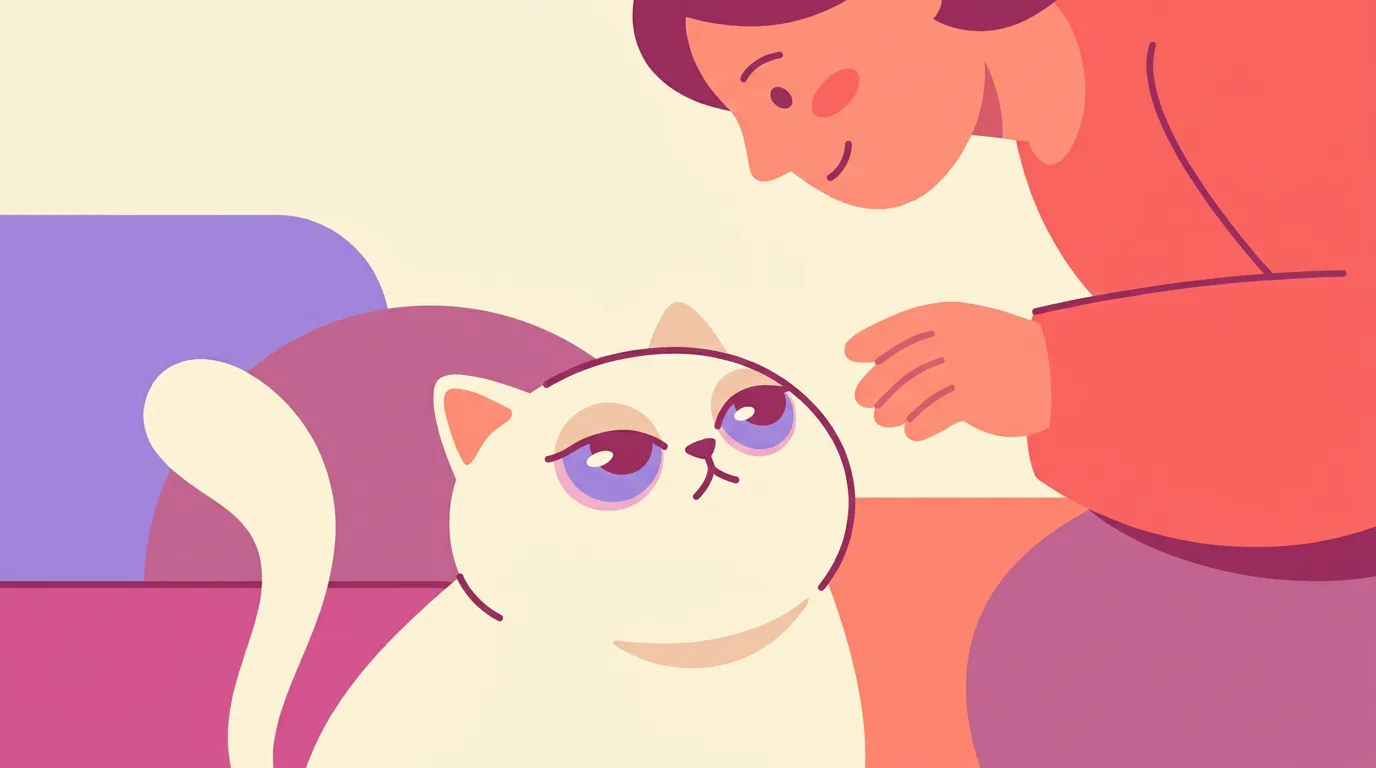
Cats stare to communicate — it’s often affection (a slow blink is a cat “I love you”), a request for food or play, curiosity, or simply keeping tabs on their favorite human. A hard, unblinking stare can be a mild challenge.
A cat sitting three feet away, motionless, staring directly at you is unsettling in a way that is hard to articulate. Part of that is instinct: among cats, a hard unbroken stare is not neutral. It is a statement. Understanding which statement your cat is making comes down to reading the rest of the face.
Direct eye contact is loaded for cats
Between cats, a sustained stare is a low-cost way to claim space. It is how a confident cat moves another away from a doorway, a food bowl or a favoured perch without a fight. Veterinary behaviour resources list staring among the offensive threat signals cats use, alongside a stiff upright posture and slow, deliberate approach.
Cats avoid meeting the eyes of cats they do not want conflict with. So the fact that your cat stares at you openly, at close range, is itself informative — it usually indicates a cat that is comfortable rather than one that is threatening you.
What the rest of the face tells you
The stare alone is ambiguous. Everything around it is not.
- Relaxed and affectionate — soft, slightly narrowed eyes, ears forward, loose body, tail still or gently upright. Often includes the slow blink.
- Requesting something — alert wide eyes with normal-sized pupils, ears forward, cat positioned between you and a door, bowl or toy. Frequently paired with a chirp or a short meow.
- Aroused, about to pounce — dilated pupils, low crouch, weight shifted forward, tail tip flicking, hindquarters wiggling. This is play stalking and you are the target.
- Genuinely tense — flattened or sideways ears, dilated pupils, stiff posture, tail thumping or wrapped tight, possibly a low growl. Break eye contact and give space.
- Disengaged staring — eyes open but unfocused, aimed past you or at a wall. Cats do stare at nothing, and usually it is nothing.
The slow blink is a real signal
If your cat looks at you and then closes their eyes slowly, holding them shut for a beat before reopening, that is a deliberate communication. Deliberately narrowing or closing the eyes removes the threat content from a stare — it is the feline equivalent of unclenching.
It works in reverse too. Meet your cat's gaze, narrow your eyes slightly, and close them slowly for about a second. Many cats will return it. It is one of the few reliable ways to actively tell a cat you are not a problem, and it is particularly useful with nervous or newly adopted cats.
Never stare a nervous cat down
With a cat that is unsure of you, a direct sustained stare reads as pressure. Turn your body slightly side-on, look past them rather than at them, blink slowly, and let them close the distance. Cats approach far more readily when they are not being watched.
Staring while you eat is a learned behaviour
Cats are excellent at spotting which of their behaviours produce results. If staring at you during dinner has ever ended in a scrap of chicken — even once, even months ago — it has been reinforced on an intermittent schedule, which is the pattern hardest to extinguish.
The fix is unglamorous: complete consistency. Any reward, however occasional, rebuilds the habit from scratch. Feeding your cat their own meal at the same time as yours, or giving them a puzzle feeder to work on while you eat, redirects the behaviour rather than fighting it.
When staring is worth investigating
Most staring is social. A few patterns are not, and they are worth separating out.
Staring fixedly at blank walls or into corners, repeatedly and for long stretches, is usually mundane — cats hear and see things we do not, particularly insects and rodents inside walls. But when it appears suddenly in an older cat, alongside disorientation, night-time vocalising, changes in litter box habits, or apparent confusion in familiar rooms, cognitive dysfunction is a real possibility and worth raising with a vet.
Signs that need a vet rather than a behaviourist
Get a check if the staring comes with visible pupil asymmetry, apparent loss of vision, circling, pressing the head against walls or furniture, or a sudden change in personality. Head pressing in particular is a recognised sign of neurological disease and warrants a same-day appointment, not a wait-and-see.
What to do about it
If the stare is relaxed, return a slow blink and carry on. If it is a request, work out what the cat wants — most staring resolves into food, a door, a lap, or play. If it is arousal before a pounce, redirect onto a wand toy rather than letting your hands become the target, which is how play aggression gets established in the first place.
And if you find it unnerving at 4am from the foot of the bed, the underlying issue is usually activity cycling rather than the staring itself. A structured play session followed by the day's largest meal in the hour before you sleep does more to shift a cat's schedule than anything you can do at 4am.
Gear that actually helps
Hand-picked for this behavior. We may earn a small commission — at no cost to you.
Frequently asked
Is my cat staring at me a sign of aggression?
Rarely, when it is you being stared at. Between cats a hard stare is a threat signal, but cats avoid eye contact with individuals they see as a genuine threat. Read the surrounding signals — flattened ears, dilated pupils, stiff posture and a thumping tail indicate tension; soft eyes and forward ears do not.
What does it mean when my cat slow blinks at me?
It is a deliberate de-escalation signal. Closing the eyes removes the threat content from a stare, so it functions as a statement that the cat is comfortable. You can return it — narrow your eyes and close them slowly for about a second.
Why does my cat stare at me while I sleep?
Cats are most active at dawn and dusk, and yours is likely awake and waiting for you. It is also a high-value moment: you are stationary, warm and predictable. If it comes with 4am wake-ups, shift their activity cycle with a play session and a large meal right before bed.
Why does my cat stare at the wall?
Usually because they can hear something you cannot — insects or rodents inside the structure are the common culprits. If it is sudden, prolonged and in an older cat, especially with disorientation or night-time vocalising, mention cognitive dysfunction to your vet.
Should I stare back at my cat?
With a confident cat you know well, holding a soft gaze and slow-blinking is fine and often welcomed. With a nervous or unfamiliar cat, do not — turn side-on, look past them, and let them approach you.
Sources
Every claim on this page is checked against published veterinary and animal-behaviour research. Here’s where it comes from.
- 1Feline Behavior Problems: Aggression — Cornell Feline Health Center
- 2Aggression in Cats — ASPCA
- 3Social organization in the cat: a modern understanding — Journal of Feline Medicine and Surgery (via PubMed Central)
- 4The Special Needs of the Senior Cat — Cornell Feline Health Center
Keep exploring
Why Does My Cat Stare at Me While I Sleep?
You wake up to two eyes locked on you. Creepy? Actually, it’s mostly love (and breakfast hopes).
Why Does My Cat Slap Me? Decoding the Paw Smack
A sudden paw to the hand or face — playful or a warning? Here’s how to read the feline slap.
Why Does My Cat Stare at the Wall? Spooky or Totally Normal?
Your cat is locked onto a blank wall and you see nothing. They don’t. Here’s what’s really going on.
Why Does My Cat Follow Me to the Bathroom?
No privacy with a cat in the house. Here’s why the bathroom always comes with a feline chaperone.
Why Does My Cat Lay on My Clothes?
Fresh laundry, worn hoodie, it doesn’t matter — your cat will claim it. Here’s the cozy reason why.
Why Does My Cat Sleep on My Pillow?
Your cat has claimed your pillow as their own. It’s a bigger compliment than it seems.