The short answer
Gentle “love bites” are usually affection and play — a soft, inhibited nibble cats use during grooming and bonding. They can also be a polite “that’s enough petting” signal or an invitation to play.
A gentle bite that does not break skin is one of the most misread things cats do. It is not aggression, and it is usually not play either. In most cases it is communication — and once you can tell the three versions apart, cats become considerably easier to live with.
The love bite
Cats groom each other with teeth as well as tongue. Between cats, a grooming sequence routinely includes small nibbles at the skin, particularly around the head and neck, interspersed with licking.
When a cat applies that to you, your skin registers the teeth far more than fur would. What feels like a bite to you is, to the cat, an ordinary component of grooming a companion — and it is one of the clearer indicators that the cat considers you part of its social group.
These bites are characteristically soft, brief, and not accompanied by tension. The cat stays relaxed, often continues purring, and frequently licks the same spot afterwards.
The overstimulation bite
This is the version most owners actually mean. Veterinary behaviour resources call it petting-induced aggression: a cat that has been enjoying contact reaches a threshold and abruptly wants it to stop.
Repetitive stroking builds arousal, and cats tolerate sustained repetitive touch considerably less well than dogs or people. Thresholds vary enormously between individuals — some cats last twenty minutes, others ninety seconds. Once the threshold is passed, the bite is a full stop rather than an attack, which is precisely why it is inhibited.
The distinguishing feature is what precedes it. Overstimulation bites are telegraphed two to five seconds ahead by a lashing or thumping tail, rippling skin along the back, ears rotating sideways or flattening, widening pupils, or the body stiffening slightly.
The three-stroke rule
Stroke three or four times, then pause and take your hand away. If your cat leans in, head-butts your hand or repositions, carry on. If it stays neutral, stop. Handing the cat control of when contact continues removes the reason to bite at all, and most owners find the biting disappears within a couple of weeks of doing this consistently.
The demand bite
The third version is learned. A cat that gently bites your hand, ankle or arm and then looks at you, walks toward the food bowl, or heads for the door is making a request. It persists because it has worked before.
These bites are usually deliberate rather than reactive: no build-up of tension, no warning signals, and the cat's attention is on what it wants rather than on your hand. Feeding, opening a door, or even reacting verbally reinforces it.
The fix is unglamorous consistency. Do not respond to the bite; respond to something else. Wait for the cat to sit, or to vocalise normally, and reward that instead. As with any intermittently reinforced behaviour, expect it to get worse briefly before it improves.
Where you pet matters
Cats are not uniformly receptive across the body. Most tolerate and actively enjoy contact around the head — cheeks, under the chin, base of the ears, forehead. Those are the scent-gland areas cats rub on objects, and the areas other cats groom.
The belly, the base of the tail and the full length of the back are far more variable. A cat rolling over and exposing its stomach is displaying comfort, not issuing an invitation. Restricting contact to the head and neck eliminates a large share of gentle biting on its own.
When it is pain
One exception matters. If the bites cluster around a specific area — one spot on the back, a hip, the base of the tail, one ear — pain becomes the more likely explanation. Cornell's guidance on feline aggression flags pain as a trigger to consider when bites occur reliably on contact with a particular region.
Arthritis is common and badly under-diagnosed in cats, and dental disease produces the same picture around the head. A cat that has always accepted handling and suddenly stops is giving you medical information rather than behavioural information.
Worth a vet appointment, and one first-aid note
See a vet if biting is new in a cat that never did it, if it always occurs at the same body location, if your cat has become reluctant to jump or is grooming less thoroughly, or if bites have escalated from inhibited nips to real force. Separately: clean any bite that breaks the skin thoroughly with soap and water, and see a doctor if it swells, reddens, feels hot or becomes more painful. Cat bites are deep punctures that seal over quickly and trap bacteria — hand bites in particular are taken seriously in human medicine.
Gear that actually helps
Hand-picked for this behavior. We may earn a small commission — at no cost to you.
Frequently asked
Why does my cat bite me gently?
Usually one of three things: a grooming nibble, which cats normally combine with licking; overstimulation, where sustained stroking builds arousal until the cat wants it to stop; or a learned request for food or a door. Reading which one it is comes down to what precedes the bite.
Are gentle cat bites a sign of affection?
Grooming nibbles are — cats groom companions with teeth as well as tongue, and directing that at you means you are treated as in-group. These bites are soft and brief, with the cat staying relaxed and often licking the spot afterwards.
How do I stop my cat biting during petting?
Use short bursts: three or four strokes, then pause and remove your hand. If your cat leans in or head-butts your hand, continue; if it stays neutral, stop. Giving the cat control of when contact continues removes the reason to bite.
What are the warning signs before a bite?
A lashing or thumping tail, rippling skin along the back, ears rotating sideways or flattening, pupils widening without a light change, and a slight stiffening of the body. They typically appear two to five seconds beforehand.
Could gentle biting mean my cat is in pain?
Yes, particularly if bites cluster on one specific area of the body or are new in a cat that always accepted handling. Arthritis and dental disease are both common and under-diagnosed in cats and should be ruled out.
Do I need to worry about a cat bite that breaks the skin?
Take it seriously. Cat bites are deep punctures that close over quickly and trap bacteria. Wash thoroughly with soap and water and see a doctor if there is swelling, redness, heat or increasing pain — hand bites especially.
Sources
Every claim on this page is checked against published veterinary and animal-behaviour research. Here’s where it comes from.
- 1Cat Behavior Problems — Aggression — Petting Aggression — VCA Animal Hospitals
- 2Feline Behavior Problems: Aggression — Cornell Feline Health Center
- 3Unravelling feline social dynamics — a video-based observational study on allogrooming in domestic cats — Van Belle et al., Applied Animal Behaviour Science (2026)
Conditions mentioned on this page
Full guides to each one — signs, urgency, and what to ask your vet.
Keep exploring
 🐱 Cat Mystery
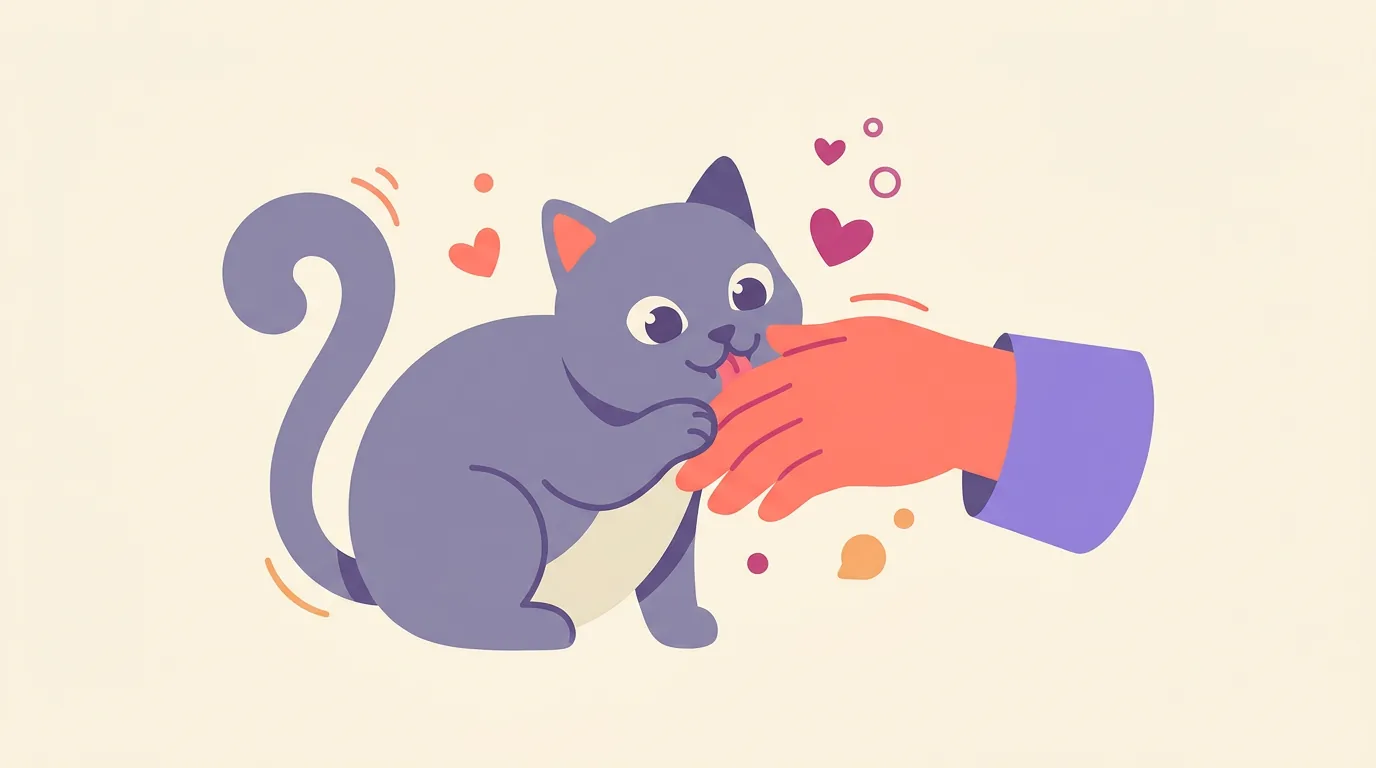
Why Does My Cat Bite Me Then Lick Me? Love Bites, Decoded
One second they’re nibbling your hand, the next they’re grooming it. It’s not mixed signals — it’s a whole conversation. Here’s the translation.
Why Does My Cat Wink at Me? The Secret “I Love You”
When your cat slow-winks at you, they’re saying something sweet. Here’s how to read — and return — it.
 🐱 Cat Mystery
Why Does My Cat Lick Me? Your Cat’s Sandpaper Love Language
It tickles, it’s scratchy, and it’s strangely sweet. When your cat licks you, they’re saying something important — here’s the translation.
Why Does My Cat Bite My Hair? The Quirky Grooming Habit
Little nibbles on your ponytail? It’s your cat treating your hair like family fur. Here’s the deal.
Why Does My Cat Bite My Nose? The Cheeky Little Nibble
Lick, then a tiny chomp on your nose? It’s cheekier than it looks — and usually means love. Here’s the deal.
Why Does My Cat Bite My Ankles? Ambush Attacks, Explained
Surprise ankle ambushes from behind the couch? Your cat is hunting. Here’s how to redirect it.