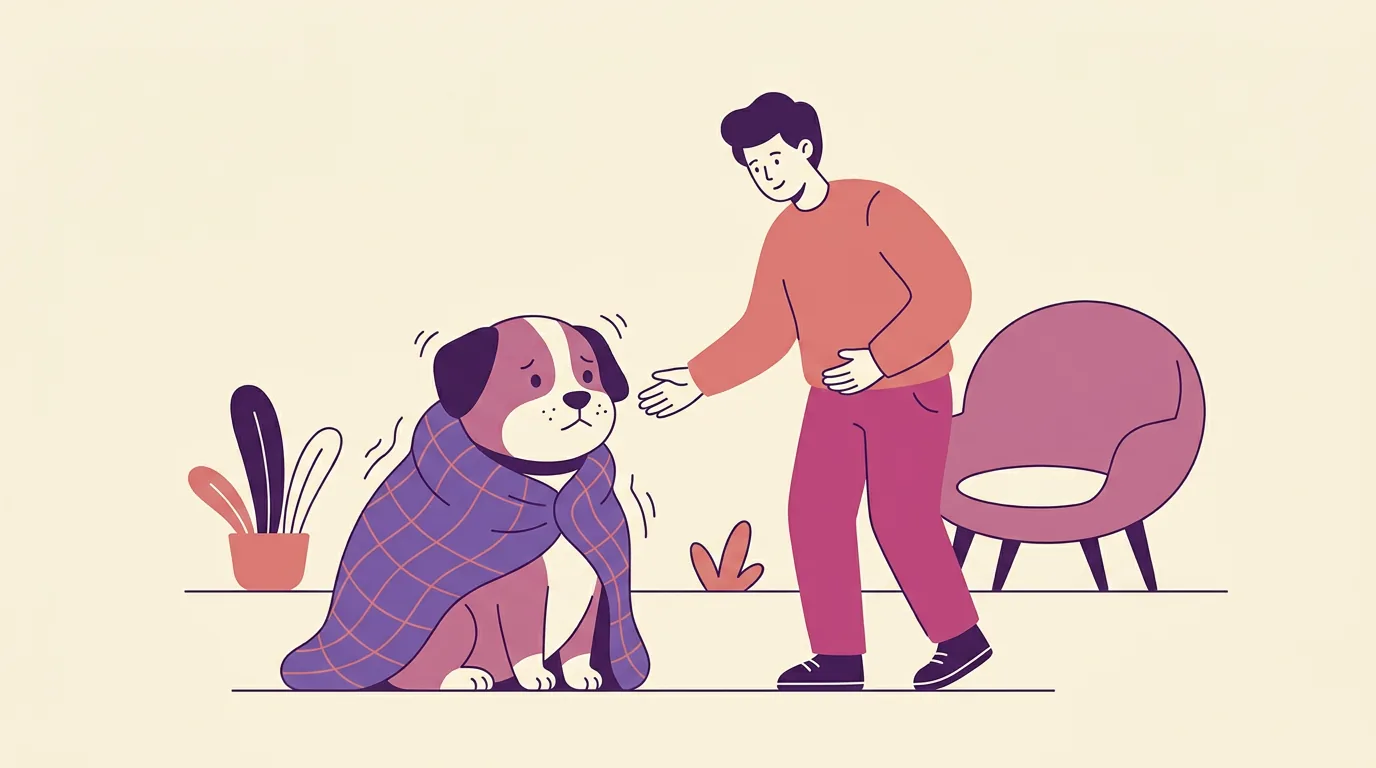
 🐶 Dog Mystery
The short answer
Shaking can be totally benign — cold, excitement, or a happy “wet dog” shake — but it can also signal fear, pain, nausea, or serious problems like poisoning or low blood sugar. Context is everything, so look at what else is going on.
A shaking dog is alarming precisely because the same movement can mean almost nothing or something urgent. Trembling is not a diagnosis — it is a symptom with a very wide differential, and the useful skill is learning which questions separate the harmless causes from the ones that need a vet today.
Start with the three questions that narrow it fastest
Before working through causes, answer these. They eliminate most of the list in under a minute.
- 1Is your dog otherwise normal? A dog that is bright, eating, walking normally and responsive is in a very different category from one that is lethargic, wobbly or not itself.
- 2Did it start suddenly, or has it built up? Sudden onset in a previously well dog raises the priority substantially — particularly toxin exposure, pain and low blood sugar.
- 3Is there a plausible trigger? Cold, a thunderstorm, the vet's car park, a stranger at the door, or the ten minutes after a bath all explain a lot of trembling on their own.
The everyday causes
Most trembling in an otherwise healthy dog comes from this group, and none of it needs treatment beyond addressing the trigger.
- Cold. Small, thin-coated, very young and very old dogs lose heat fast. Shivering is the body generating heat through muscle activity, and it resolves once the dog warms up.
- Excitement. Anticipation of a walk, a meal or a returning owner produces a whole-body tremble in some dogs. It stops the moment the thing happens.
- Stress and fear. Trembling is one of the most reliable stress signals in dogs. Fireworks, thunder, car journeys, vet visits and unfamiliar people are the usual culprits.
- Tension release. Dogs commonly shake off — the full-body shake used when dry — after a stressful moment such as stepping off an examination table or an encounter with a strange dog. It is a recognised way of discharging arousal.
- Old age. Hind-limb tremor is common in senior dogs and often relates to muscle loss and joint changes rather than anything acute, though it is still worth mentioning at a check-up.
There is also the version that is not trembling at all. A dog repeatedly shaking its head after a bath or a swim is far more likely to have water or an infection in the ear than a systemic problem — that one usually resolves with a vet looking down an otoscope.
The medical causes that matter
This is the group worth knowing by name, because several of them are time-sensitive.
- Pain. Trembling is a common pain response in dogs, and unlike people they rarely vocalise. Abdominal pain, back pain and pancreatitis all present this way, often with a hunched posture or reluctance to be touched.
- Nausea. Dogs frequently tremble when nauseated, usually alongside lip-licking, drooling and repeated swallowing.
- Toxins. This is the reason not to wait. Chocolate, xylitol, nicotine, some mushrooms, slug bait and certain human medications all cause tremors, and several cause seizures. Xylitol in particular is in a great many sugar-free products and is dangerous in small amounts.
- Low blood sugar. Especially in puppies, toy breeds and diabetic dogs on insulin. Hypoglycaemia produces trembling, weakness, disorientation and can progress to collapse.
- Shaker syndrome. An immune-mediated condition producing generalised tremors, thought to involve mild inflammation of the cerebellum. It is treated with prednisone, and tremors typically settle within one to two weeks of starting treatment — a genuinely treatable diagnosis.
- Addison's disease. Intermittent episodes of shaking are among the signs seen with this hormonal condition, which is notorious for presenting vaguely.
- Distemper. A viral infection that can cause tremors, most often in unvaccinated or incompletely vaccinated dogs.
- Kidney disease and other metabolic conditions, which produce tremor as part of a broader picture of illness.
Trembling versus a seizure
This distinction is worth being able to make on the spot, because it changes how urgently you act.
A trembling dog is conscious and aware. It can look at you, respond to its name, walk, and usually stop shaking if you address the cause. Muscle tone is normal and there is no loss of bladder or bowel control.
A seizure typically involves altered consciousness. The dog may fall, paddle its legs rigidly, salivate heavily, urinate or defecate, and afterwards be disoriented, restless or temporarily blind for minutes to hours. If you are unsure, film it — a phone video is genuinely one of the most useful things you can bring to the appointment.
What to check before you call
Take note of: when it started, whether your dog will eat a favourite treat, gum colour (should be pink and moist), whether the abdomen is tense or painful, whether anything unusual has been eaten in the last few hours, and whether the tremor stops when the dog is distracted. Those five observations answer most of what a vet will ask on the phone.
When to see a vet
Any new, unexplained trembling in a dog deserves a phone call — the range of causes is simply too wide to self-diagnose confidently. Some of it, though, should not wait.
Treat these as urgent
Go now if the trembling comes with: any possibility your dog has eaten a toxin, especially chocolate, xylitol, nicotine, slug bait or human medication; collapse, weakness or inability to stand; pale, white or blue-tinged gums; a hard, swollen or painful abdomen; repeated vomiting; unproductive retching; disorientation, circling or head pressing; or a suspected seizure. Also treat trembling in a very young puppy or a small-breed dog that has not eaten as urgent — hypoglycaemia can progress quickly.
For everything else, book a routine appointment rather than watching for weeks. Trembling that has a behavioural cause is easy for a vet to confirm and rule out, and the reassurance is worth the visit.
If it turns out to be anxiety
Fear-based trembling is common and very treatable, but not by reassurance alone. The old advice that comforting a frightened dog reinforces fear is wrong — fear is an emotional state, not a rewarded behaviour, so you can and should comfort a frightened dog.
What changes the underlying problem is desensitisation and counter-conditioning: exposure to a very mild version of the trigger paired with something excellent, gradually increasing intensity only as the dog stays relaxed. For noise phobias in particular, that work is far more effective when started well before firework season rather than during it, and your vet can discuss medication for dogs whose fear is severe enough that they cannot learn while exposed.
Gear that actually helps
Hand-picked for this behavior. We may earn a small commission — at no cost to you.
Frequently asked
Why is my dog shaking but acting normal?
In a dog that is bright, eating and moving normally, the usual causes are cold, excitement, stress, or the full-body shake dogs use to discharge tension after a stressful moment. It is still worth a routine vet check if it is new or repeating, because pain and nausea can present with few other signs.
When is dog shaking an emergency?
Go immediately if there is any chance of toxin ingestion (chocolate, xylitol, nicotine, slug bait, human medication), or if shaking comes with collapse, weakness, pale or blue gums, a hard painful abdomen, repeated vomiting, unproductive retching, disorientation or a suspected seizure. Also urgent in a puppy or toy-breed dog that has not eaten.
How do I tell shaking from a seizure?
A trembling dog stays conscious — it responds to its name, can walk, and has normal muscle tone. A seizure usually involves altered consciousness, falling, rigid paddling, heavy salivation, sometimes loss of bladder or bowel control, and a disoriented period afterwards. Film it if you are unsure; the video is genuinely useful to your vet.
Can shaking mean my dog is in pain?
Yes. Trembling is a common pain response and dogs rarely vocalise. Abdominal pain, back pain and pancreatitis often present this way, frequently with a hunched posture, reluctance to be touched, or unwillingness to jump.
What is shaker syndrome?
An immune-mediated condition causing generalised tremors, thought to involve mild inflammation of the cerebellum. It is diagnosed by a vet and treated with prednisone, with tremors typically resolving within one to two weeks of starting treatment.
Why does my dog shake after a bath or at the vet?
Partly cold and wet, but also tension release. Dogs use the full-body shake to discharge arousal after a stressful moment — it is commonly seen right after stepping off an examination table or meeting a strange dog, and it is a normal, healthy reset.
Sources
Every claim on this page is checked against published veterinary and animal-behaviour research. Here’s where it comes from.
- 1Why Is My Dog Shaking? Causes & Solutions — American Kennel Club
- 2Shaker Syndrome in Dogs — VCA Animal Hospitals
Keep exploring
Why Does My Dog Snore So Loud? From Normal to Worth a Vet
Your dog snores like a chainsaw. Adorable — but here’s how to know when the rumble is worth a look.
Why Does My Dog Yawn So Much?
Your dog yawns way more than seems sleepy — because for dogs, yawning is also communication. Here’s how.
Why Does My Dog Lick His Paws So Much?
A quick clean is fine, but nonstop paw-licking is your dog telling you something’s wrong. Here’s how to decode it.
Why Does My Dog Lick the Floor?
Your dog treats the kitchen floor like a plate. Usually it’s crumbs — but sometimes it’s a clue. Here’s how to tell.
Why Does My Dog Put His Paw on Me?
That gentle paw on your arm is your dog reaching out — literally. Here’s what they’re asking for.
Why Does My Dog Howl at Sirens?
An ambulance passes and your dog throws back its head to howl. It’s ancient wolf instinct at work. Here’s why.